
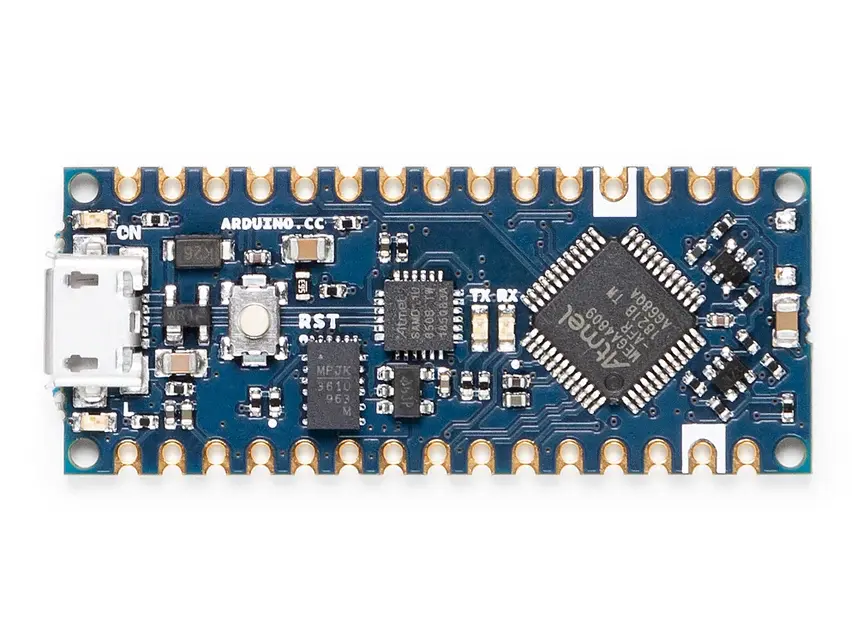

Arduino Nano Every Board – Pack of 3 – ABX00028-3P
Arduino Nano Every, pack of 3 (ABX00028-3P) – enhanced versions of the classic Nano board.
What It Is
The Arduino Nano Every is an enhanced version of the classic Nano board featuring a more capable microcontroller (ATmega4809), improved memory, and a micro-USB connector while keeping the familiar Nano footprint and compatibility with Arduino IDE. The 3-pack gives you three identical boards for multiple projects, backups, or classroom use.
Infographic-Style Summary
ARDUINO NANO EVERY PACK | | (ABX00028-3P 3 Boards Included), Pack Contents | 3 Arduino Nano Every Boards | MCU | ATmega4809 AVR Microcontroller | Clock Speed | 20 MHz | Memory | 48 KB Flash, 6 KB SRAM, 256 B EEPROM | Operating Voltage | 5 V | USB Interface | Micro-USB Type-B (for program & power) | Digital I/O Pins | 14 (compatible with sta 10-bit ADC channels | Communication | 1 UART, 1 SPI, 1 I2C IDE Compatibility | Fully supported in Arduino IDE (Windows, | | | macOS, Linux) |
Pack Benefits: More boards for multiple prototypes, classes, or team projects.
Core Technical Features
Microcontroller
ATmega4809 AVR MCU modern replacement for older AVR chips with more flash memory and RAM than classic Nano.
Ideal for moderately complex sketches involving multiple sensors, actuators, and real-time logic.
Power & Connector
Operating voltage: 5 V.
VIN range: ~7 V 21 V (external supply via VIN pin when not USB powered).
USB: Micro-USB Type-B port for programming and power.
aace with LEDs, buttons, relays, etc.
5 PWM outputs for motor control, analog-style signaling.
8 Analog Inputs with 10-bit resolution read sensors like temperature, light, joysticks.
Communication interfaces: UART, SPI, I2C for displays, wireless modules, and peripherals.
Arduino IDE
Fully compatible with Arduino IDE write, compile, and upload sketches just like any other Arduino board. It also benefits from the Arduino library ecosystem and community support (for example sensors, displays, motor drivers, etc.).
Typical Uses & Projects
The Nano Every is excellent for:
Educational electronics kits & workshops it's affordable and Arduino-IDE friendly. Robotics & automation aearables & compact designs its small size works well in space-limited builds. Prototyping & iterative development fast experimentation with multiple boards at once.
Why It Matters
The Nano Every gives you the classic simplicity of Arduino but with a more capable microcontroller and memory footprint enabling larger programs and more complex logic than older AVRs like ATmega328p and the multi-board pack provides value and flexibility for multi-device prototypes or collaborative projects.
Quick Specs at a Glance
Feature | Detail |
MCU | ATmega4809 |
Clock | 20 MHz |
Flash | 48 KB |
SRAM | 6 KB |
EEPROM | 256 bytes |
Digital I/O | |
Analog Inputs | 8 |
Interfaces | UART, SPI, I2C |
Operating Voltage | 5 V |
USB | Micro-USB Type-B |
Dimensions | ~45 mm 18 mm |
td>5