
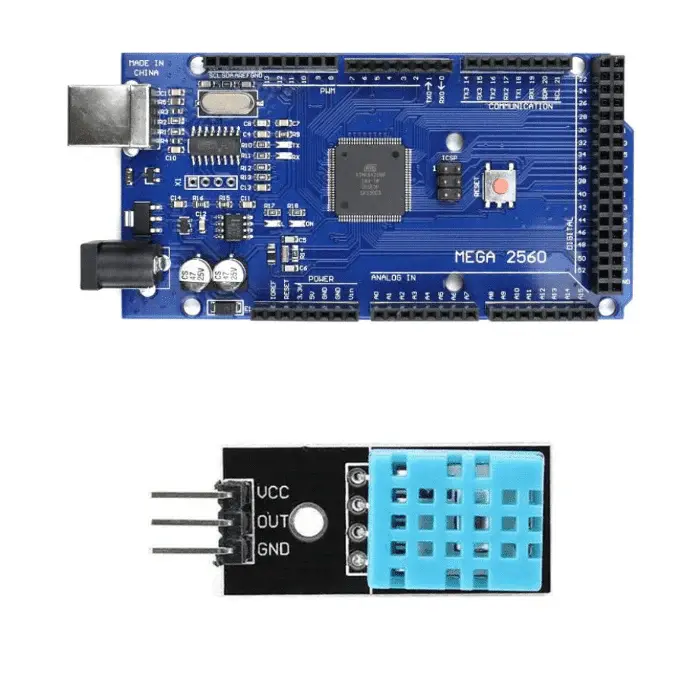

Arduino Mega 2560 + DHT11 Temperature & Humidity Sensor Module
Arduino Mega 2560 + DHT11 sensor module combo – an ATmega2560 microcontroller board with a DHT11 digital temperature and humidity sensor.
Overview
The Arduino Mega 2560 is a microcontroller board based on the ATmega2560.
The DHT11 module is a digital temperature and humidity sensor.
Together, they are used for environment monitoring projects (temperature + humidity display/logging).
Arduino Mega 2560 Key Features
Microcontroller: ATmega2560
Operating Voltage: 5 V
Digital I/O Pins: 54 (15 PWM)
Analog Inputs: 16
Clock Speed: 16 MHz
Flash Memory: 256 KB
Best For: Large projects requiring many pins
DHT11 Sensor Key Features
Temperature Range: 0 C to 50 oity Range: 20% to 90% RH
Accuracy: Temperature: 2 C Humidity: 5% RH
Output: Digital (single-wire protocol)
Operating Voltage: 3.3 V 5 V
Sampling Rate: 1 reading per second
Pin Connections
DHT11 Module Arduino Mega 2560
VCC 5V
GND GND
DATA Digital Pin (e.g., D2)
Note:
If using a bare DHT11 (not module), add a 10 k pull-up resistor between VCC and DATA.
How It Works
DHT11 senses temperature (thermistor) and humidity (capacitive sensor).
Sensor converts readings intng>single digital pin.
Data is processed and displayed on Serial Monitor / LCD / IoT dashboard.
Basic Working Logic
Initialize DHT11 library in Arduino code.
Read temperature & humidity values periodically.
Print or display values.
Typical Applications
Weather monitoring systems
Smart home automation (HVAC control)
Greenhouse monitoring
IoT environmental logging
Educational projects
Important Notes
Slow Sensor: Updates only once per second.
Low Accuracy: Not suitable for precise measurements.
Better Alternatives: DHT22, SHT31, SHT40 for higher actrong>Stable Power: Use clean 5 V supply for consistent readings.
Summary
Arduino Mega 2560: Controller with many I/O pins
DHT11: Basic temperature & humidity sensor
Interface: Single digital pin communication
Use Case: Simple environmental monitoring projects
</